
Click on a writer’s name to read some of their latest work
Jack Barnette
Janice Bratt
Wally Cwik
Jessica Gremer
Tony Lupo
Jill Pinsky
Rick Rayborn
Joe Weishampel
Victor Zenda
Jack Barnette
The gentle eye of summer dims as winter’s stinging breath descends
Forest canopies surrender their painted leaves
Golden harvests lie stacked in wheatstraw sheaves
We became enlightened. The world was illuminated.
We had bright ideas. We saw the light.
Fire opened our eyes.
For good or bad this is our inevitable future. Playing with fire has its risks.
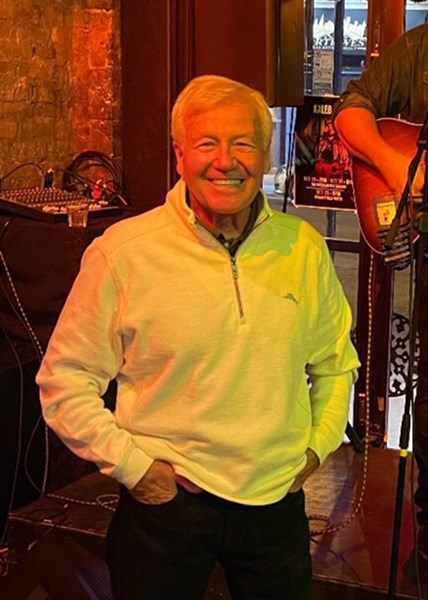
Jack Barnette is a longtime Park Ridge resident. Barnette, now retired, was an environmental scientist with the EPA for more than 30 years.
Janice Bratt
Thanks For The Memories
Visits far and wide to see kids, grandkids, a dog, a cat and a lizard.
A wide variety of activities, meals and fun.
A best friend who joins me and connects with the 4th grader about vegetarians and triominos.
A teen grandson who runs track and gives me hugs.
An almost driving granddaughter appointed as “first alternate” for bass as only a sophomore.
A 2 yr old young lad who jumps in my lap and calls me “Miss Grandma.”
2 proud young girls exploring soccer, scouts and dance.
Time to catch up with my adult children.
Visits to cute towns to shop have lunch and explore.
A safe landing there and smooth overnight train trip back.
Coming home to friends, familiar activities and a purring cat.
A warm bath, a humming furnace, a sprinkling of snow and a nice sleep.
A hot bowl of minestrone sums it all up.
Janice Bratt is a retired CPA, enjoying friends and family, especially her 3 children and 6 grandchildren. She has recently found 2 new hobbies – writing and painting. She lives in Park Ridge with her cat, Tianna.
Wally Cwik
A Test
The ceiling light winkled off the three goldfish flitting through the castle in the aquarium’s water. Moira walked around the table. She pressed her nose against the glass bowl on all four sides, leaving a small oily smudge. She noted an observation in the steno pad with her fountain pen.
Moira dragged the table to the corner of the room, and concentric ripples formed on the water’s surface in the bow as the table legs squeaked and chattered on the tile floor. Mirrors lined the walls from corner to corner. She rested her chin on the tabletop and concentrated on the bowl.
The image of the bowl reflected off the two adjacent wall mirrors, giving the appearance of an infinity of bowls and fish. Moira annotated her notepad.
Let’s adjust the surroundings by introducing a new element into the environment.
Moira placed a tea strainer filled with fish food at the water’s surface, and the fish hovered beneath the sieve, their mouths groping. She made a note.
Lower the room temperature to sixty-five degrees.
Moira attached the strainer with wires to the battery’s poles. She rubbed her bare arms, trying to eradicate the forming goosebumps.
Two technicians observed the situation through the one-way mirrors. One wrote notes on paper held in place on a clipboard.
Moira’s chilled hand quivered as she touched the free end of the wire to the sieve. The fish skittered away, and Moira wrote down the observation.
The second technician said, “Lower the temperature another five degrees and electrify the table.”
Moira unconnected the battery lead and observed the fish swim back to the sieve and more food. She jumped away from the table as a tingle of electricity shot up her arm. Damn battery, she thought, walking to the far wall to look for a sweater.
The first technician scribbled notes on his clipboard pad.
“Decrease the luminosity in the workspace,” the first robed man said. The second robed man clicked on his tape recorder and spoke into the microphone, “Reducing lumens by thirty-three percent.” The third, robed man turned the dimmer dial and watched through the ceiling scope as the work area below darkened.
The second techie bent closer to the rheostat, straining to read the numbers on the dial. He said, “Increasing the voltage to the table.”
Moira touched the wire to the sieve. The fish swam away.
An electrical shock jolted Moira away from the table.
The first techie squinted at his instructions.
The three robed men laughed just before the background noise level increased by twelve decibels.
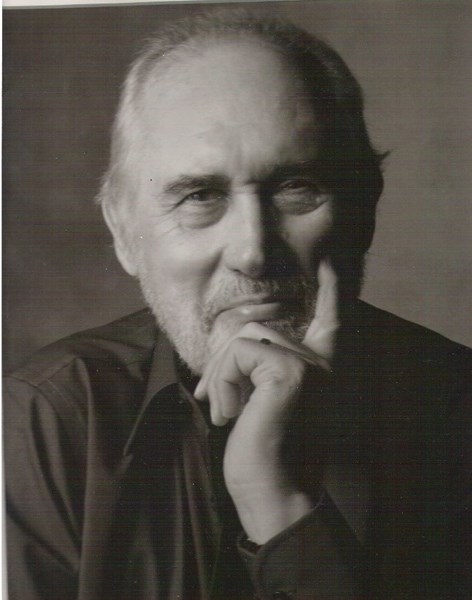
Wally Cwik is semi-retired from the Engineering profession and has performed for over 25 years with the Park Ridge Players, a community theatre. He has written some radio plays performed with the Those Were the Days Radio Players, a group that recreates old-time radio shows around Chicago. He has appeared as a featured reader at the Twilight Tales in Chicago and has published stories in some small anthologies. He has teamed with Janette Avila, a recent Maine East High School graduate, to illustrate a soon-to-be-published book, The Mishaps of Angel and Puggy which this episode will appear.
Jessica Gremer
She Sings in the Morning
Altogether, she is more than what she seems
She speaks of brightness but cries in the dark,
She sings in the morning and despairs in her dreams.
In her mind, she is like cool dew but the warmest steam,
An elevation and depression paint dualling colors,
Altogether she is more than what she seems.
She dresses in silver, but gold is just as bright
The differences in hue are easy for her to see,
She sings in the morning and despairs in her dreams.
She dances and plays but sorrows and frights
An explosion of madness and clarity break even,
Altogether, she is more than what she seems.
Sometimes there is grey and black is white
Magic happens and witchcraft manifests,
She sings in the morning and despairs in her dreams,
In the end, balance is what she desires
For sustaining the storm makes her a shell,
Altogether, she is more than what she seems,
She sings in the morning and despairs in her dreams.
Tony Lupo
The Money Never Came In
The money never came in.
We trailed behind ghosts –
trained for battle,
but raised in peace time.
Frozen lakes speak
haunted languages.
Love squats in a place,
worries about paying rent later.
High above what was once
an oak savanna,
hawks circle
aging elms
that lean over the water
listening to its campfire tales.
Carpenter ants appear in formation,
soldiers on the move.
The morels remain hidden,
frightened treasures.
The money never came in.
If it had,
we wouldn’t have come
back here
to unfold the born-again spring,
to stick toes in the bog,
to graze the sphagnum moss
with tips of noses,
to gaze on the wild calla,
hear the swoosh in the sway
of cattails,
to mourn the loss
of a father who loved this place.
Jill Pinsky
Colors and People
Colors are like people: simple and complicated at the same time.
People say that red and crimson are the same.
They are, but they are not.
Red is love and pain at once.
But crimson is just a hue of red. It’s still bright and bold, while creating some mystery.
Just like a personality.
Yes, colors are like people. Complicated and has many sides.
Sometimes I feel I have more in common with colors than people.
On the surface, you can see that colors have similarities.
People like colors have different hues. But harder to see.
People are complicated, and complicated has many sides.
But then I remember that people associate colors with emotions and personalities.
Orange and terracotta are the same and different. Both can be warmth and arrogance at once. Just like a person.
Colors are like people: simple and complicated at the same time.
Just like red is love and pain, it’s also strength and determination.
Or is that only true if you are a man?
As people, we do not associate a color with stubbornness.
But to me, stubbornness and determination are just a different hue of red.
Does it matter whose wearing it?
Rick Rayborn
Gratitude
As loss to health comes with age
And sleep is stolen, time unwound
When all that ails weighs me down
Breathe deep the air will be my gauge
Simple gifts for those that see
A house made strong of clay and steel
Long since hunger pangs were real
And always with a spirit free
And if the work becomes slight
To cope a while without pay
Nights come long, and grey are days
I’ll still give thanks for morning’s light
Because no violence hovers
No civil strife or cold war close
By compare, my hurts not woes
Happy for nights long, and lovers
Then frail the trust, killed complete
Lies cast forth causing monster’d pain
Anger there has left its stain
Yet kindness blooms, and is replete
Warm my heart with shared spirit
Embracing every savored touch
Not your being that is clutched
Your soul my goal, to dwell near it
To suffer through scorn and shame
And Jackals howl in group mistake
Ego slain and honor breaks
To still be good with one’s old name
Having friends who judge sincere
An earned respect from those that care
Guiding stars when course has err’d
And standing firm when times are drear
To fear not, that which I am
And step into my purpose called
Tearing down protective walls
Stilled voice no more, and freed the dam
Feel the flow of life’s great stream
And feel the truth of words I say
Now to walk a higher way
This world of mine, a wakened dream
Joe Weishamphel
By the time Bill rolled out of bed, Ella had returned from her run, showered, and re-dressed. She liked to arrive at the farmers’ market at 8 a.m., right when it opened—something about beating the crowds or the peaceful start of a new day. Bill didn’t see the appeal. For him, buying a few straight-from-the-farm fruits and vegetables was a sufficient exercise of wholesomeness, and just being at a farmers’ market, regardless of the number of other people, brought him an adequate amount of mental peace. But he also recognized that Ella cared more deeply about the matter than he did, so he went along with her.
They arrived before the sun had burned the frost off the ground. Bill shivered as he got out of the car. It was a cold late April morning, though it would surely give way to a sunny, warm afternoon. At the entrance, Bill and Ella kissed quickly, and she strode off to the right in a businesslike manner. As he walked left, Bill wondered whether the farmers’ market deliberately separated the healthy foods from the sweeter fare that he liked, in some sort of bizarre shaming ritual.
Bill explored for just twenty minutes before Ella found him. She was toting bags full of kale, broccoli rabe, and some other healthy green Bill couldn’t identify. By that time, Bill’s haul consisted solely of one container of fresh dates. Ella noticed this and shot him a look.
“Are you sugar-bombing yourself again?” she asked, as they began to wander together.
Bill explained that the dates were for reasons sentimental as well as nutritional. Ella had heard the story a few times now, and knew she would not win this battle.
“We both know that I’m not the boss of you,” she conceded. “I just like giving you crap for buying little sugar bombs—which is what dates are—just because they remind you of the beach. There are other ways to remember the beach. Healthier ways. You’re probably thinking of the beach right now, without spiking your glucose.”
“I know, I’m such a terrible person and my teeth are going to rot and fall out,” Bill said.
She squinted at his face. “My medical expertise tells me that your teeth have about five years left,” she joked gravely. “Six, maybe. But don’t worry. I’ll take care of you, gum boy. Gumby? Gummo? Whatever. I’ll brush your teeth covertly. After you fall asleep if I have to.”
They walked past a table of homemade candy, which Bill managed to quickly evaluate without Ella noticing. Responding to her, he said, “Thank you. I take it you don’t have any foods that trigger memories for you?”
“Hm?”
“Oh, you know, foods where, as soon as they touch your tongue, you’re taken back somewhere involuntarily. Like, memory-wise, I mean.”
“No, I keep my memories separate from my fridge.”
Thinking of her relentlessly organized shelf full of mementos, Bill internally agreed.
“Anyway,” she continued, “nutrition is so important. As you know, a person is, quite literally, what they eat. Any use of food to trigger memories is, by definition, a deviation from what a person should be eating. Diet should be based on nutritional needs. Not memory. Not sentimentality. Nutritional needs. Maybe we should get you a nutritionist to align your diet appropriately.”
“Well, give me a couple more weeks to see if I can ‘align’ it on my own,” Bill said, parrying any concrete action on the issue.
Bill gave Ella the keys as the got back into his car, and she began to drive back to her high rise. Bill closed his eyes and let his mind wander. Intellectually, he understood Ella’s sensible division between food and memories. But he was also thankful he did not think like her. Each date he ate pulled him back to his family’s visits to Ocean City when he was a child. He could smell the salty air and hear the piercing shouts of his cousins rising above the surf in the background. He could feel his towel beneath him as he lay in the sun, exhausted from a day of submitting his thin child frame to the battering fury of the Atlantic. He could even feel the precise spots where his sunscreen had washed off and the sun drilled a hole through his pale complexion. Every date he ate triggered at least one of these sense memories—often more. He had never heard Ella mention a food, a smell, or any other sensation that could open this doorway to her memories. And (though he was willing to be surprised) he did not think any photos or other stimuli put her in a similar state of mind.
He opened his eyes slightly to look at her. Did she reserve enough of her mind for sentimental, useless, human thoughts? He hoped so. He hoped she wasn’t all practicality, but the layer of dust on her photo albums suggested she was not sentimental.
Victor Zenda
Corinna
“Oh… Ooh… Oooh!” The elderly man was complaining mildly about the cold water of Lake Michigan. Lazy, short waves were lapping against his ankles as he and his wife were sitting next to each other in camping chairs. They were ready for a long, long day of doing nothing and enjoying every minute of it.
Their beach was part of a bay facing a vast, empty sea; there were no sails, no fishing boats, only a skinny seagull or two. The lake water was crystal clear with delicate clouds of fine sand and bits of seaweed moving in rhythm with the lake waves.
“I can’t believe, I just can’t believe how clean this water is. It’s almost good enough to drink,” the man said to his wife. And he pointed at the round pebbles and bits of white seashells on the bottom of the lake.
It was sweet and wonderful, sweet and marvelous to be on a holiday with some of his grandkids and the rest of the family. His wife was all smiles, practically in paradise. “How lucky I am, how awfully lucky I am…” he murmured to himself and lowered his head to see if he could spot a little fish, perhaps a wayward crayfish: great bait for smallmouth bass that thrived in this part of the Lake.
The bay was south of Jacksonport in Door County, Wisconsin. It was an arc, a half mile long, of pristine sand set against sharp bluffs covered with tall birch and pine. There were no homes, no cottages; if it wasn’t for the sunbathers mostly from Chicago and Milwaukee, a person could mistake this area for Sweden or Norway.
***
With a cool breeze wafting in from the northeast, it was one of those unique days in July __ to die for. But for some reason the man was sad… and he didn’t want his wife to notice. A gloom lingered in his soul like the gentle water between his toes. It was bittersweet, an impression from the past when he was in love and visited this beach with a girlfriend named, Corinna. Her mother was an Ojibwe from northern Wisconsin and died when Corinna was a little girl. Her father was a lumberjack and abandoned her, partly from grief, partly from the curse of alcohol.
“Corinna, Corinna…” the man murmured to himself and watched children next to him dig a hole in the light-amber sand.
Corinna had her mother’s raven hair, almond-shaped eyes and olive skin. He still tasted her ripe lips and thrilled at the caress of her hand. He was twenty-two years old, she was nineteen, already a queen and a treat for any man. It was the summer 1969 and a year later, she suddenly left him for another… as lovers often do for no good reason. She claimed to be confused… and even cried on the phone that perhaps it was a mistake.
They had vowed to live together, one heart forever. Their union was rare, almost divine, solid as a rock until Corinna blew it apart.
It took him a long time to recover and till the present his heart still carried the scar.
***
“Why are you so quiet?” asked the man’s wife. She had broken his reverie. He had been gazing directly ahead where the sky kissed the sea. Except for a mob of children jumping and splashing, Lake Michigan was flat, one big tear. “Oh… I’m thinking about the sudden storms on this Lake and all the logging ships at the bottom of this bay,” he answered. Then he shook his head in despair and said: “I wonder how many sailors drowned with those ships… with the name of their sweetheart tattooed on their skin?”
His wife said nothing. She had lived with her husband long enough to know he wasn’t telling her the whole truth.

Prior to retirement, Victor Zenda lived in Park Ridge for over thirty years. Both of his two daughters graduated from Maine South H.S. He is currently a resident of Niles and grew up in Cicero, Illinois: a suburb just west of Chicago.
He is a baby-boomer born in 1947 in a U.S. Army hospital in Frillee, Germany. In Cicero he attended St. Mary’s grammar school, Morton East H. S. and Morton Junior College. He received his B.A. degree from Northern Illinois University majoring in Secondary Education, Fine Arts and French Literature. He also studied Law at IIT/Chicago-Kent and Transportation at the College of Advanced Traffic in Chicago.
Mr. Zenda taught French at Mt. Carmel H.S. in Hyde Park and later went to work for the Burlington Northern Railroad, Bekins Van lines and United Van lines. When he retired he did a stint as a driver for PACE just for “fun” and stopped working in 2020.
He is currently… and has been for the last few years… writing fiction: something he regretted not doing earlier in life. He has been married for forty-seven years and has five grand-children

